Workspace
Workspace Organization Ideas & Minimal Desk Setup Inspiration
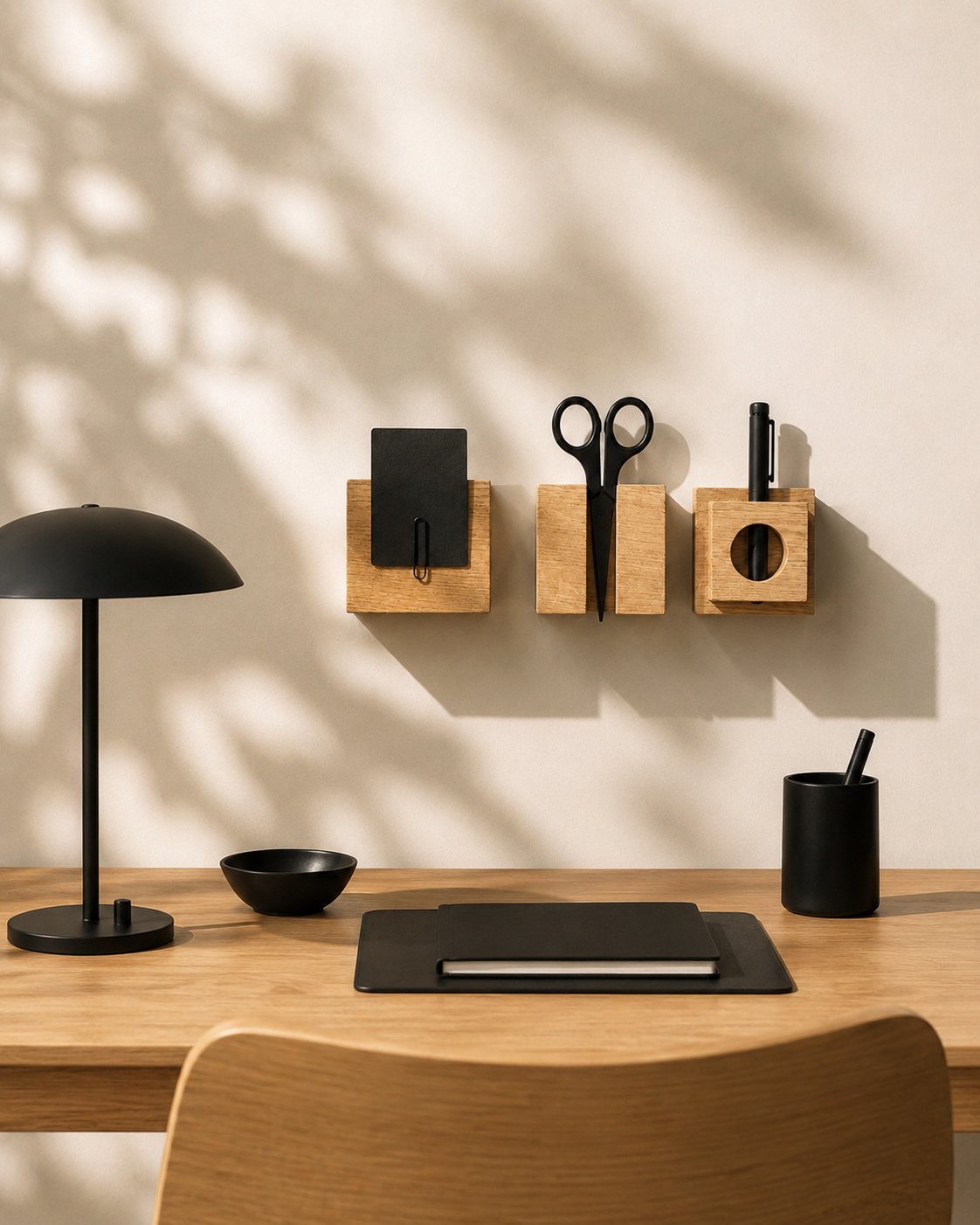
A well-organized workspace is more than a tidy desk. It is a setting for concentration, where the objects in view support the task at hand and the ones that do not are given a quiet home out of sight. In a minimal workspace, oak, paper and matte ceramic replace plastic and visual noise. Natural materials slow the eye. Modular systems keep tools accessible but contained. The result is an intentional environment that helps the mind settle, so that ideas can take shape without competing for attention.
01
What Makes a Minimal Workspace?
A minimal workspace begins with intention, not emptiness. Every object on the desk or wall is there because it serves a real purpose, not because it was once useful or might be needed someday. This kind of editing is demanding, but it creates a clarity that affects the quality of the work itself.
Fewer, better objects is the guiding idea. A single well-made pen, one dependable notebook and a quiet desk lamp replace a drawer of half-empty supplies. When each item is chosen with care, the workspace stops feeling like storage and starts feeling like a tool.
Focus depends on visual calm. The eye is drawn to contrast, clutter and unfinished tasks. A minimal workspace removes these interruptions by giving everything a consistent, low-contrast home. Oak holders on a pale plaster wall, paper stacked in a single tray, a matte ceramic cup for pens: these small decisions reduce the mental load of simply being in the room.
Natural materials reinforce this calm. Solid oak introduces warmth and variation without demanding attention. Linen, untreated paper and soft daylight bring texture and life to an otherwise disciplined space. The workspace becomes less like an office and more like a quiet studio.
The result is a room that supports deep work. When the environment is stable and unobtrusive, the mind is free to concentrate on the work itself. That is the real value of minimalism: not the look, but the quality of attention it makes possible.
Objects
Objects for this Space
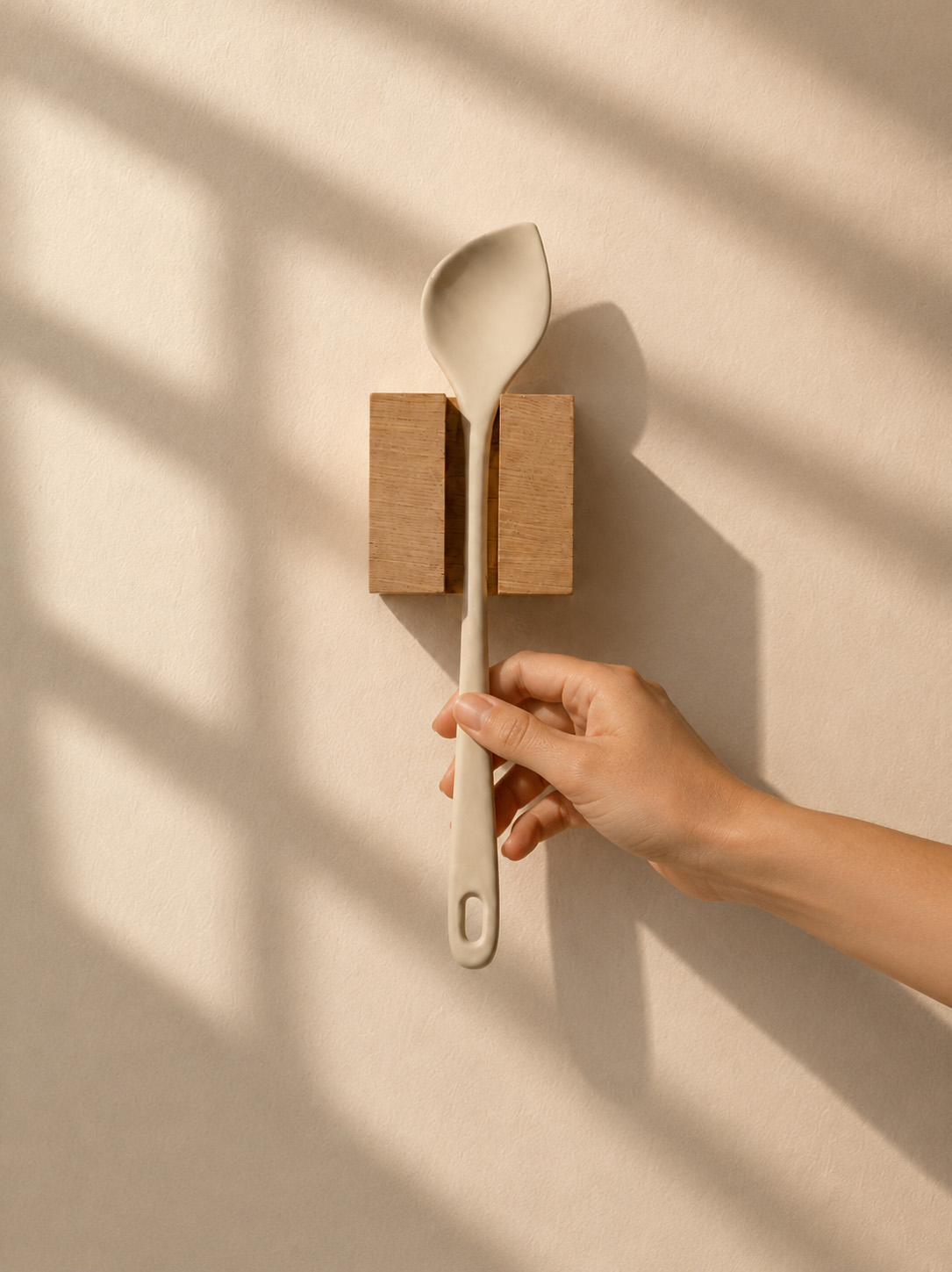
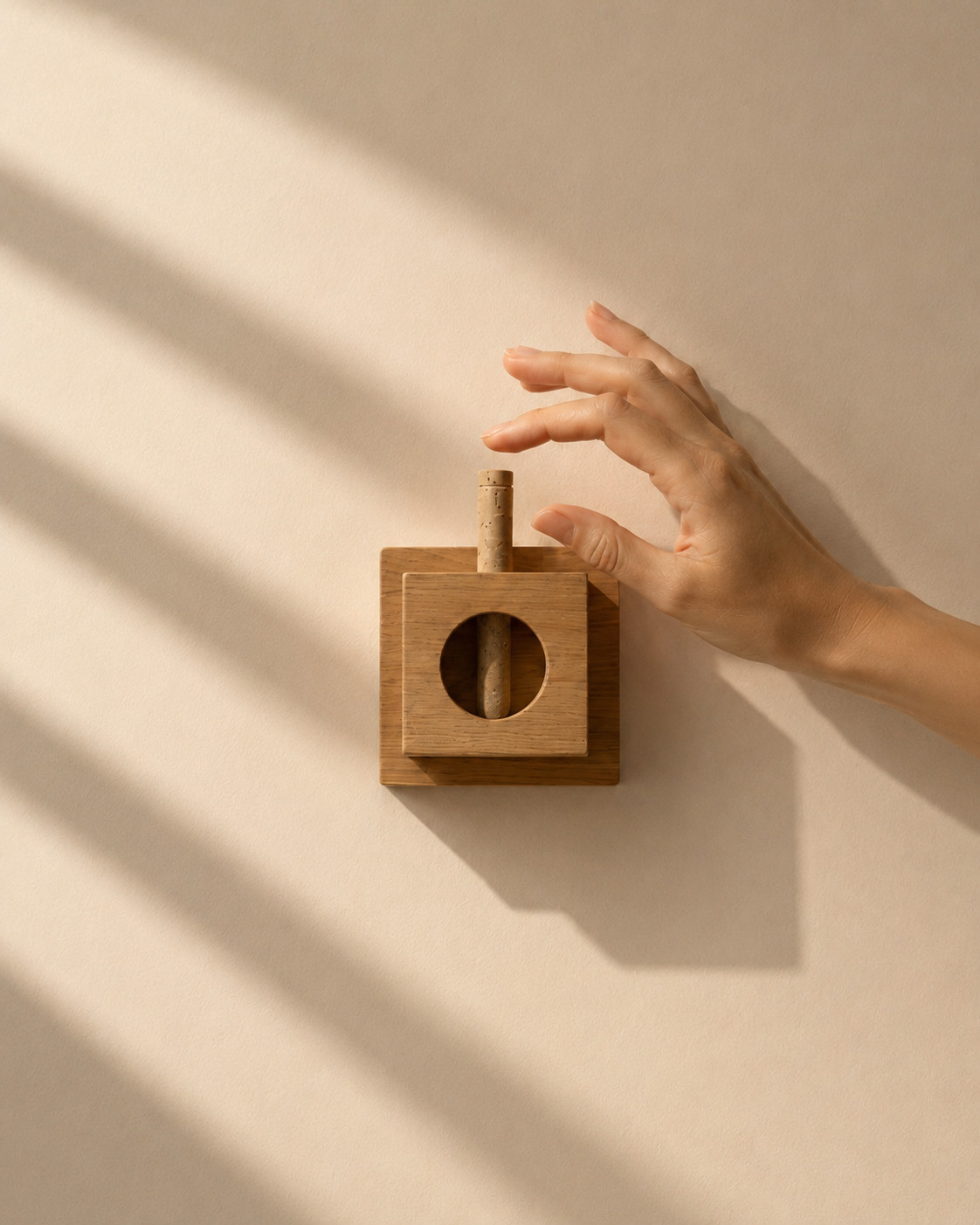
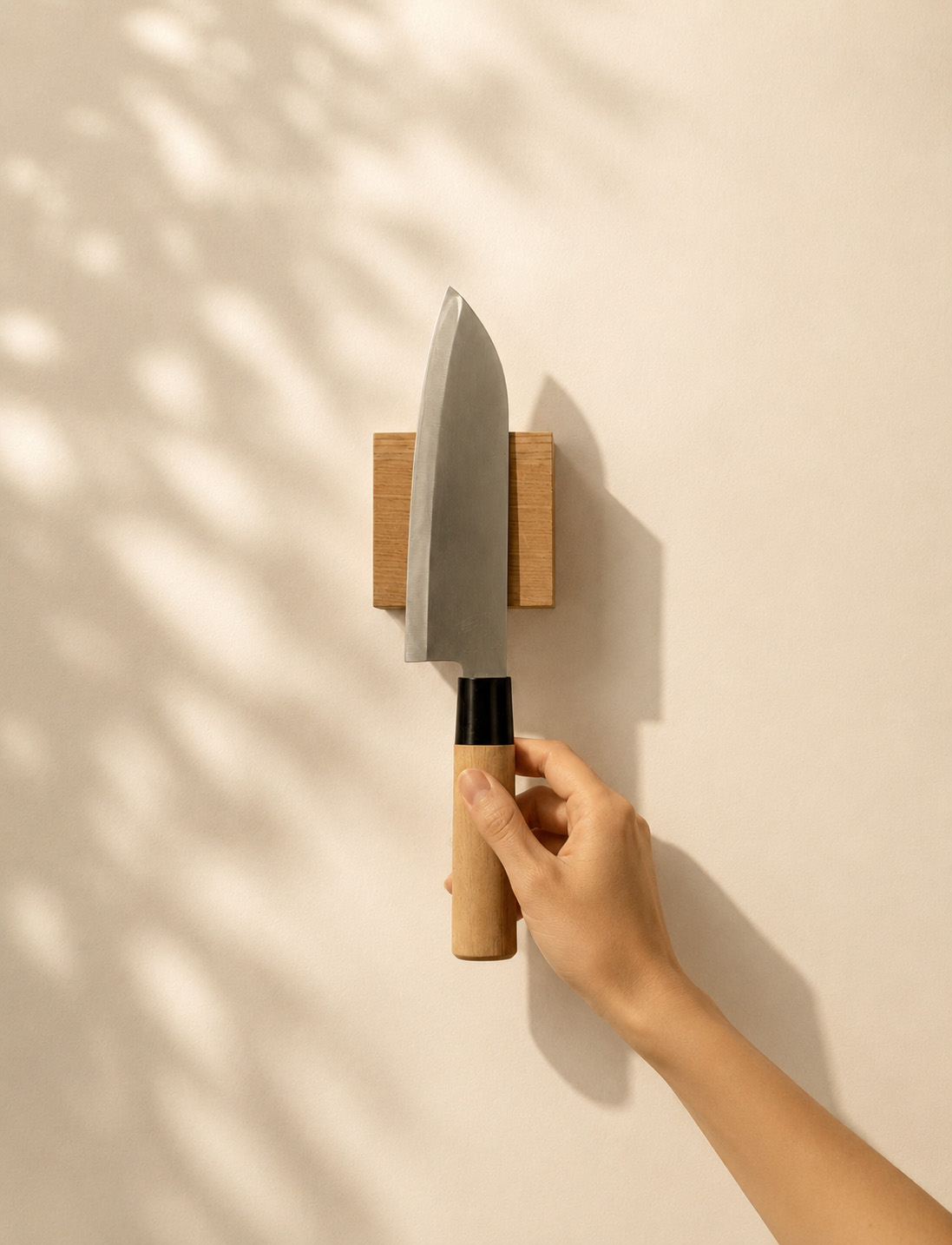
Carefully selected objects designed for this environment. Every object follows the same modular grid and can be expanded over time.
02
Workspace Organization Without Clutter
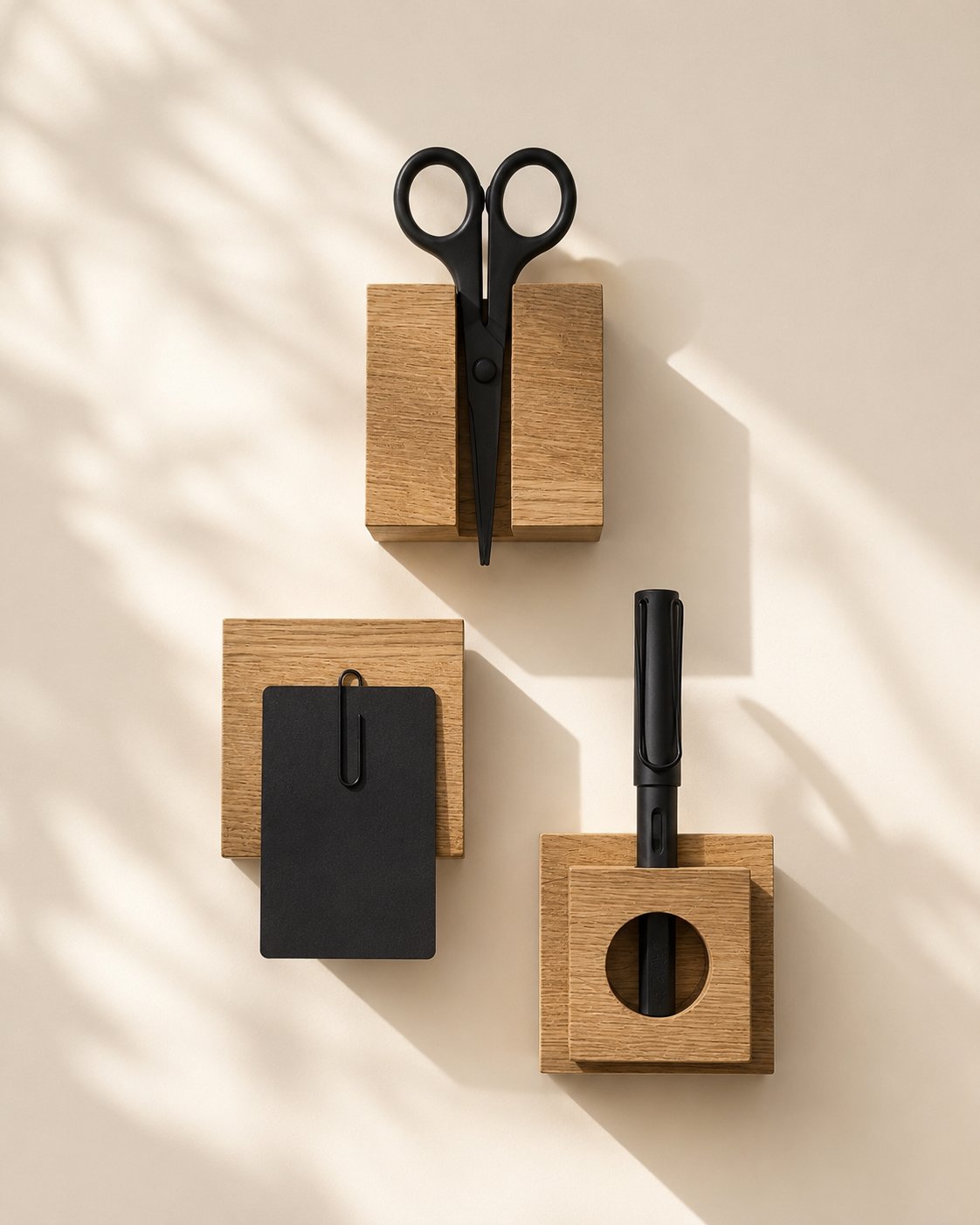
Clutter is not always excess. Often it is a problem of placement. The notebook, the ruler and the cable that live on the desk are used every day, yet their constant presence creates a background hum of distraction. Wall-mounted organization solves this by moving daily tools onto the vertical plane, where they remain visible without occupying the work surface.
Freeing desk space is the immediate benefit. A clear horizontal plane gives the current project room to expand and signals to the mind that there is space to think. The desk becomes a stage for the work in progress rather than an archive of every previous task.
Accessibility matters as much as tidiness. Tools should be easy to reach but not in the way. A modular oak wall organizer keeps pens, scissors and small supplies within arm's reach while removing them from the line of sight. The hand knows where to go; the eye does not have to sort through options.
Reducing distractions is also about boundaries. When the desk is cleared at the end of the day, the workday ends with it. A wall system makes this ritual possible by giving every object a defined place to return to. The separation between work and rest becomes physical and visible.
Workflow optimization follows naturally. A workspace that is organized around the rhythm of real work — writing, sketching, reviewing, assembling — allows the user to move between modes without resetting the entire room. Modular storage means the system can move with the work, not against it.
03
Home Office Organization Ideas
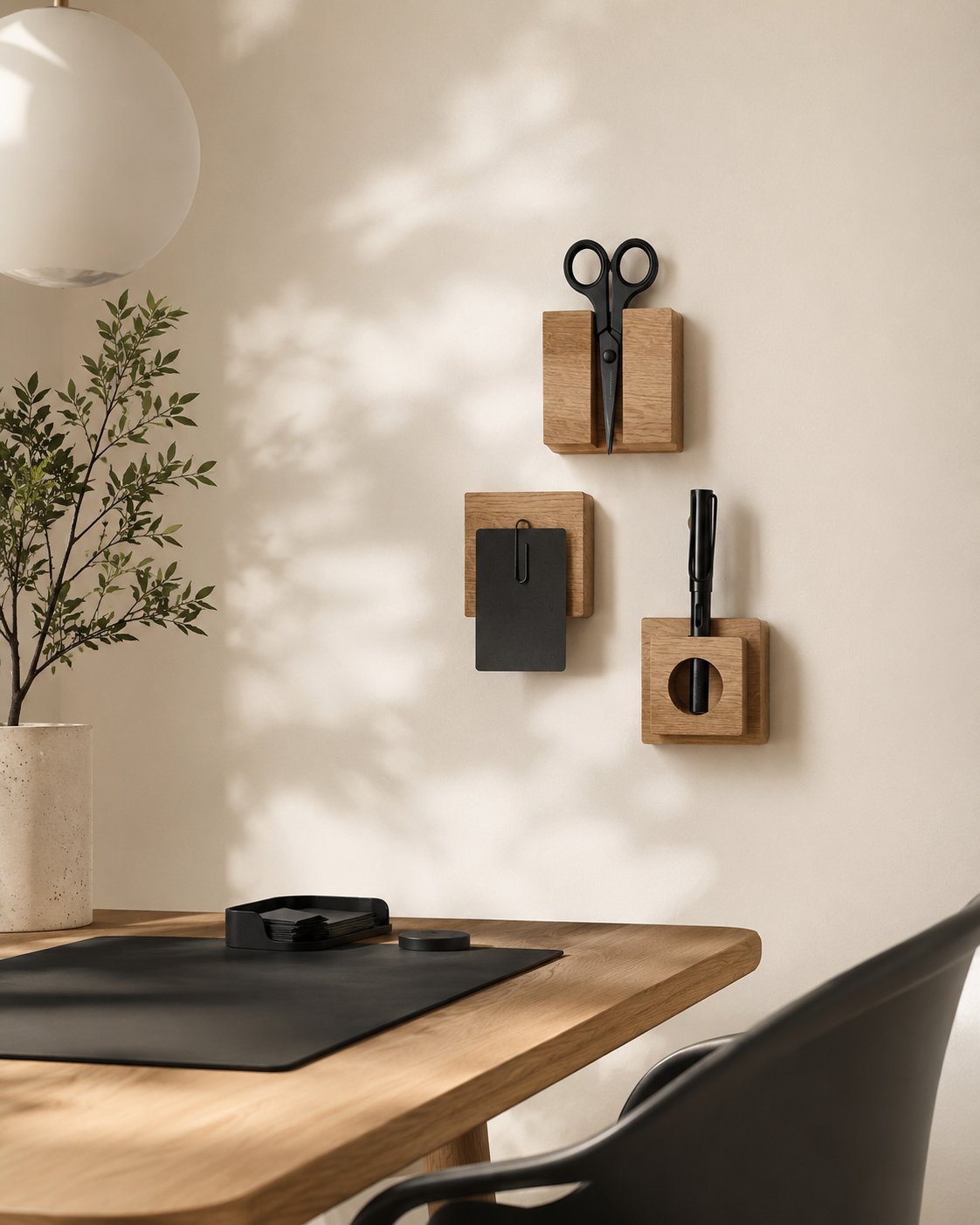
Working from home asks more of a room than a traditional office. It must support productivity while also allowing the day to end. It must hold technology without becoming about technology. And it must sit quietly within a home that already has many other purposes.
The first organization idea is to define the workspace as a distinct zone. This does not always require a separate room. A single wall above a desk, a consistent chair and a small collection of tools can create the psychological boundary needed for focus. When the work is finished, the chair is pushed in and the wall remains composed.
Productivity grows from systems that are easy to maintain. A desk with a single drawer, a wall-mounted organizer and a closed cabinet for supplies keeps daily objects accessible and occasional objects out of sight. The goal is to reduce the number of decisions required to start and stop working.
Creating separation between work and life is essential for wellbeing. If the office is also the dining table, a modular wall system and a dedicated storage box can perform the same function as a closing door. The physical act of putting work away becomes a transition ritual.
A calm and focused home office is built from the same principles that guide the rest of the house: natural materials, a limited palette, honest craftsmanship and just enough storage to keep surfaces clear. The result is a workspace that feels like an extension of home, not an intrusion into it.
04
Modular organization for creative tools
Creative work resists rigid systems. The tools change with the project: pencils give way to swatches, then to small prototypes, then to references printed on heavy paper. A modular oak system follows this rhythm without protest.
Because each OAKA holder shares the same 8 cm grid, modules can be rearranged on the wall as projects shift. A configuration that suits writing in winter can be reorganized in spring for a season of sketching, without ever feeling improvised.
Start with the tools you reach for hourly: pens, a single notebook, a measuring tape. Give each its own dedicated holder. As the work changes, add a module. As old projects close, remove one. The wall becomes a quiet record of the practice.
05
Featured OAKA office system
The OAKA Pixel Series 01 was designed for kitchens but works exceptionally well above a desk. Each module is hand-finished in solid oak and sized to a shared grid, allowing creative tools to be organized with the same quiet precision as kitchen utensils.
Begin with one Pixel Utensil 01 to hold pens, pencils and a small ruler. Add a Pixel Spice 01 for clips, erasers and other small consumables. Together they form a compact wall organizer that can expand into a full creative system as your practice evolves.
Objects in this space
The OAKA objects used here.
Pixel Utensil 01
Modular oak holder for pens, pencils and everyday creative tools.
Pixel Spice 01
Sculptural oak container for clips, erasers and small desk objects.
Pixel Knife 01
Magnetic oak holder for a single pair of scissors or precision tool.
Explore
Explore More Spaces.
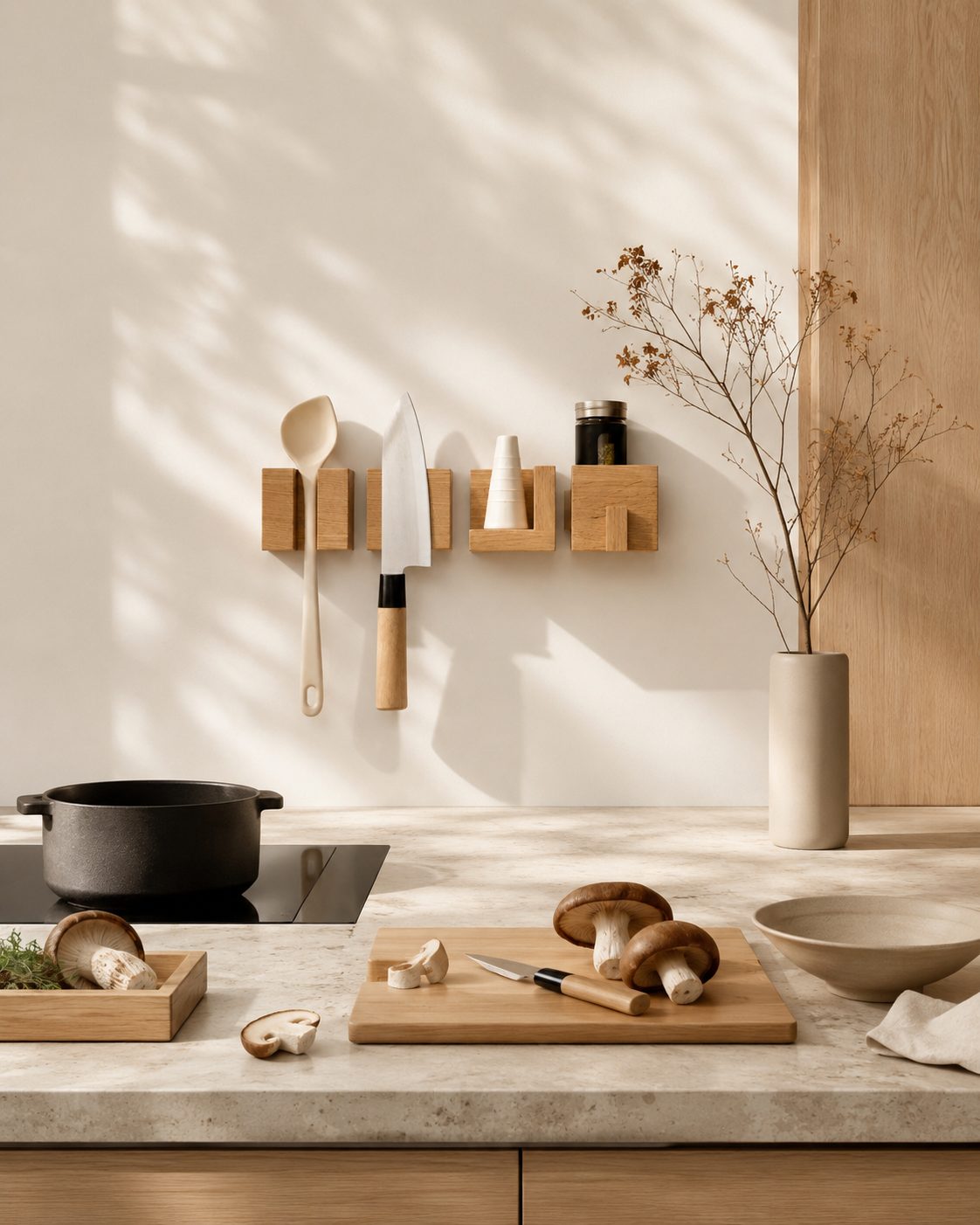
Kitchen
Japandi Kitchen
Modular wall storage for calm and organized kitchens.
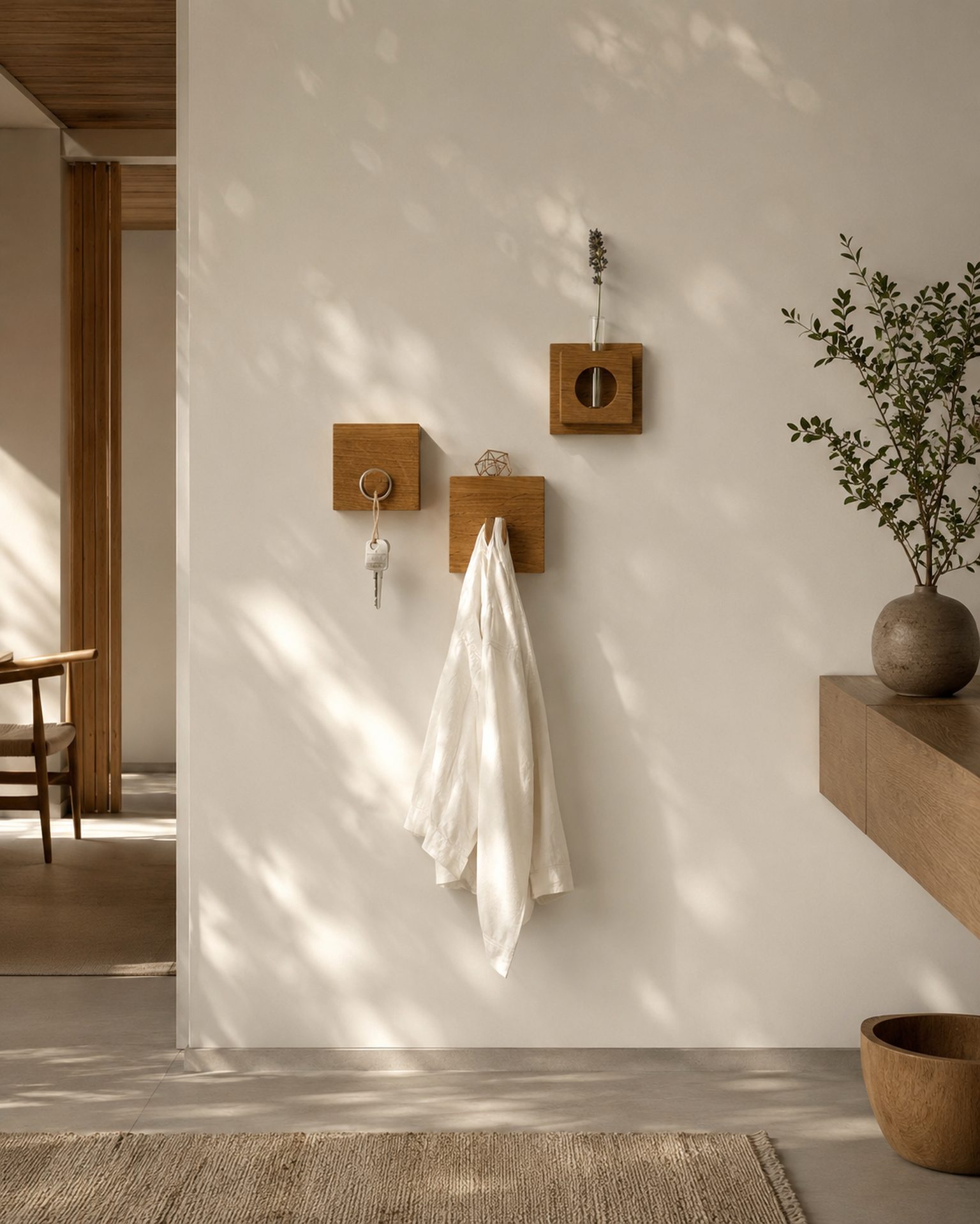
Entryway
Japandi Entryway
Japandi entryway ideas with modular oak wall storage for calm, organized arrivals.
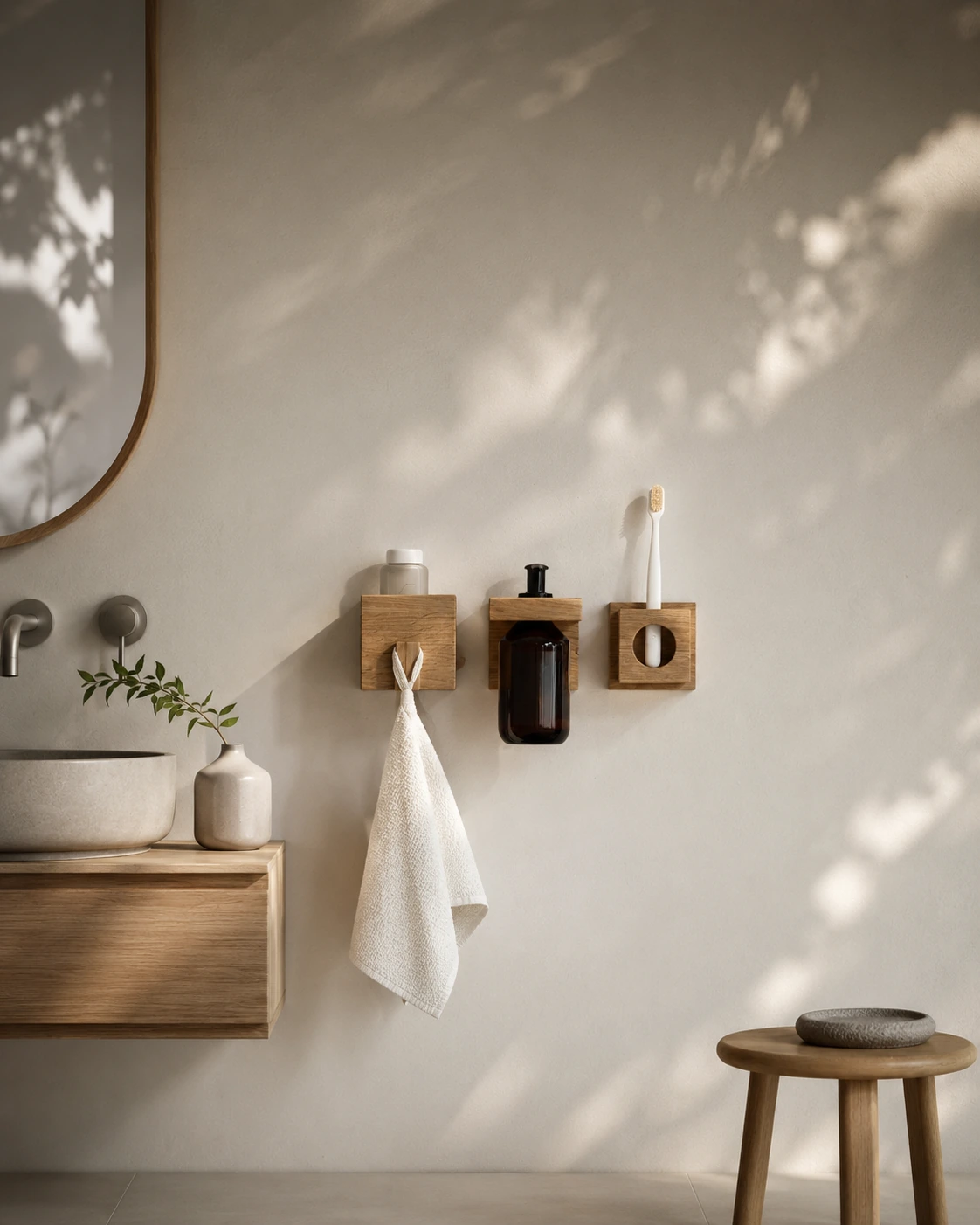
Bathroom
Japandi Bathroom
Japandi bathroom ideas with modular oak wall storage and bathroom organization for calm, minimalist bathrooms.