Kitchen
Japandi Kitchen Ideas & Minimal Kitchen Organization
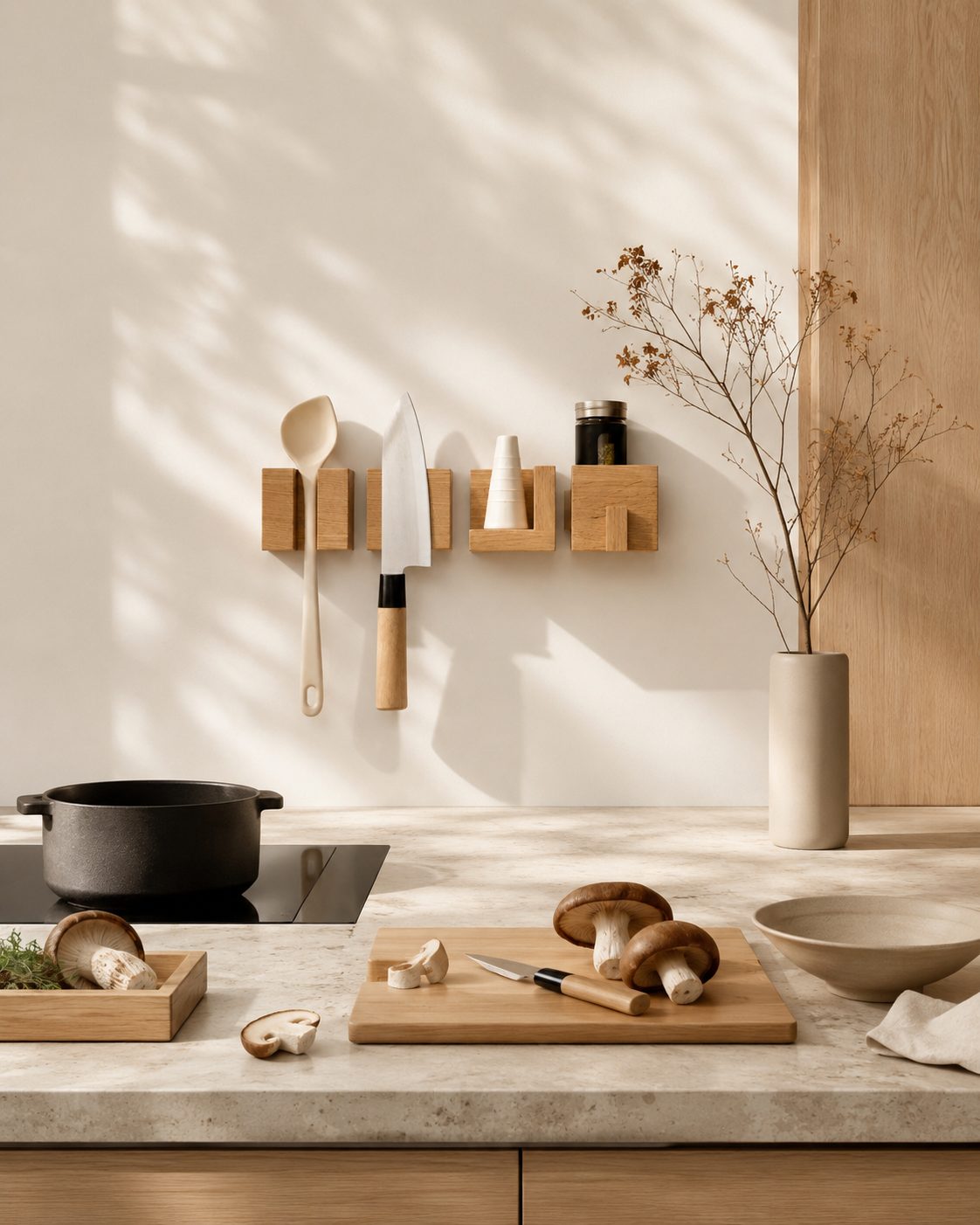
A Japandi kitchen blends the quiet restraint of Japanese design with the warm functionality of Scandinavian interiors. It is a space built around natural materials, honest craftsmanship and modular organization — where every object has a purpose and the room itself encourages calm, intentional living.
01
What Defines a Japandi Kitchen?
At its heart, Japandi is a dialogue between two design cultures. Japanese interiors favor emptiness, natural light and the beauty of imperfection. Scandinavian design brings warmth, tactile surfaces and a deep respect for everyday function. Together they create kitchens that feel serene without being cold, and practical without being plain.
Natural materials are essential. Solid oak, untreated stone, linen and ceramic introduce warmth and variation into otherwise simple rooms. In a Japandi kitchen, these materials are not decorative accents; they are the architecture of the space. Oak grain becomes a visual rhythm. Stone counters provide a grounded surface. Textiles soften acoustics and light.
Minimalism here is not about owning less for the sake of it. It is about removing distraction so that cooking, gathering and cleaning can happen with ease. Surfaces stay clear. Storage is planned rather than improvised. The result is a kitchen that supports daily life rather than competing with it.
Functional organization is what keeps the philosophy honest. Knives hang within arm's reach. Spices are visible but contained. Utensils return to the same place every evening. Every choice is deliberate, and that deliberateness is what produces visual calm.
Objects
Objects for this Space
Carefully selected objects designed for this environment. Every object follows the same modular grid and can be expanded over time.
02
Why wall storage creates visual calm
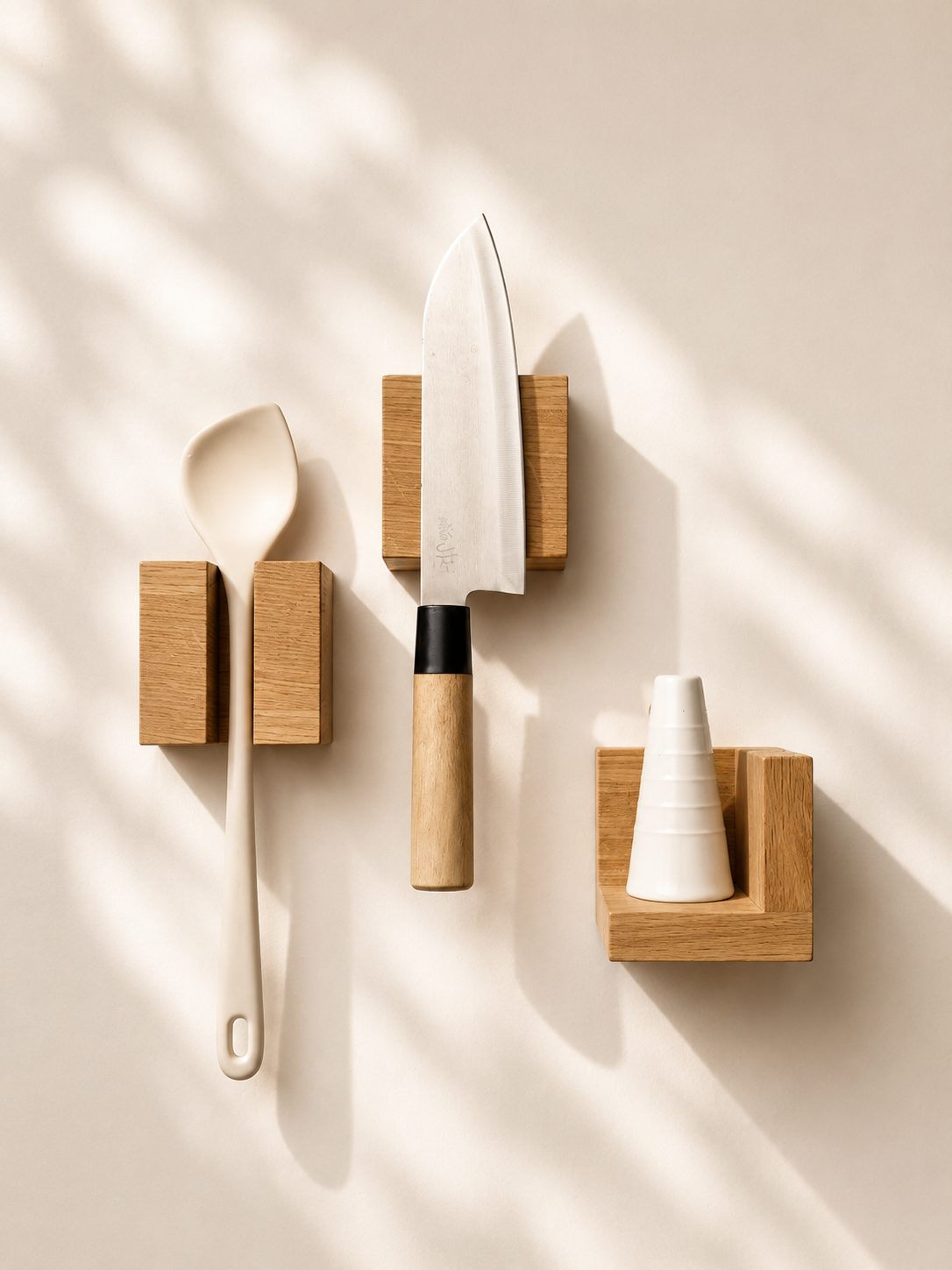
Counters fill quickly. Toasters, oils, jars and boards accumulate, and even the most beautiful kitchen begins to feel busy. Wall storage rebalances the room by lifting daily objects off horizontal surfaces and giving them their own architectural place.
When oak holders are mounted along a single horizontal line, they form a quiet rhythm that the eye can read at a glance. The wall stops being a passive backdrop and becomes part of the kitchen's composition. The countertop, in turn, is allowed to breathe.
This is not minimalism for its own sake. It is a practical strategy for living well in compact homes, small kitchens and open-plan apartments where the kitchen is always partly visible from the living room.
03
Kitchen Organization Without Visual Clutter
The most useful kitchen objects are the ones we reach for repeatedly: a chef knife, a wooden spoon, a favorite spice jar, a pair of tongs. In a Japandi kitchen these tools are neither hidden in drawers nor left loose on the counter. They are assigned a visible, intentional place on the wall.
Wall-mounted storage keeps everyday tools accessible while freeing the countertop for the work of cooking. A clean counter is more than an aesthetic goal. It creates physical space for preparation and mental space for focus. When the horizontal plane is clear, the kitchen feels larger and calmer.
Freeing countertop space also means reconsidering what deserves a permanent spot. Small appliances, bulk ingredients and rarely used gadgets can move to cupboards or pantries. What remains on display should be beautiful enough to earn its place and functional enough to use every day.
This kind of intentional organization is especially valuable in compact kitchens, open-plan homes and city apartments where the kitchen is always partially visible. Modular wall storage makes it possible to edit the room over time, adding or removing pieces as habits change.
04
Modular organization for everyday objects
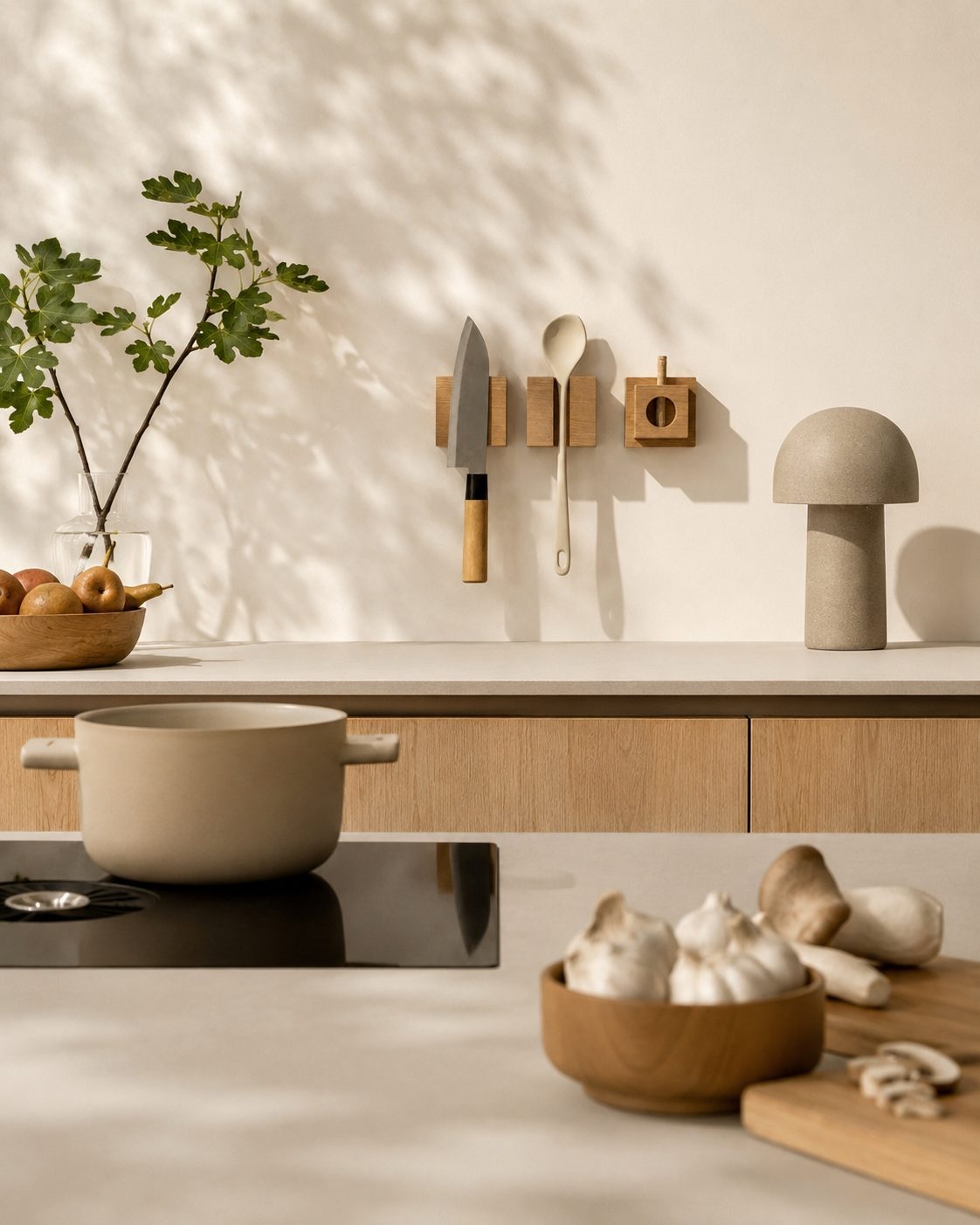
Modular oak storage works because it respects how kitchens actually function. Cooking habits shift with the seasons, with new recipes, with the addition of a partner or a child. A fixed-format shelf cannot follow these changes; a modular system can.
Each OAKA holder is built to a shared grid, which means a knife holder, a utensil holder and a spice holder can sit side by side or be reconfigured across the wall as needs evolve. The grid becomes an invisible logic that holds the composition together, no matter how it is arranged.
Start with a single object that solves a specific problem, such as taming a drawer full of utensils, and expand the system as new needs emerge. Over time, the wall becomes a quiet portrait of how the kitchen is really used.
05
Creating a kitchen that evolves over time
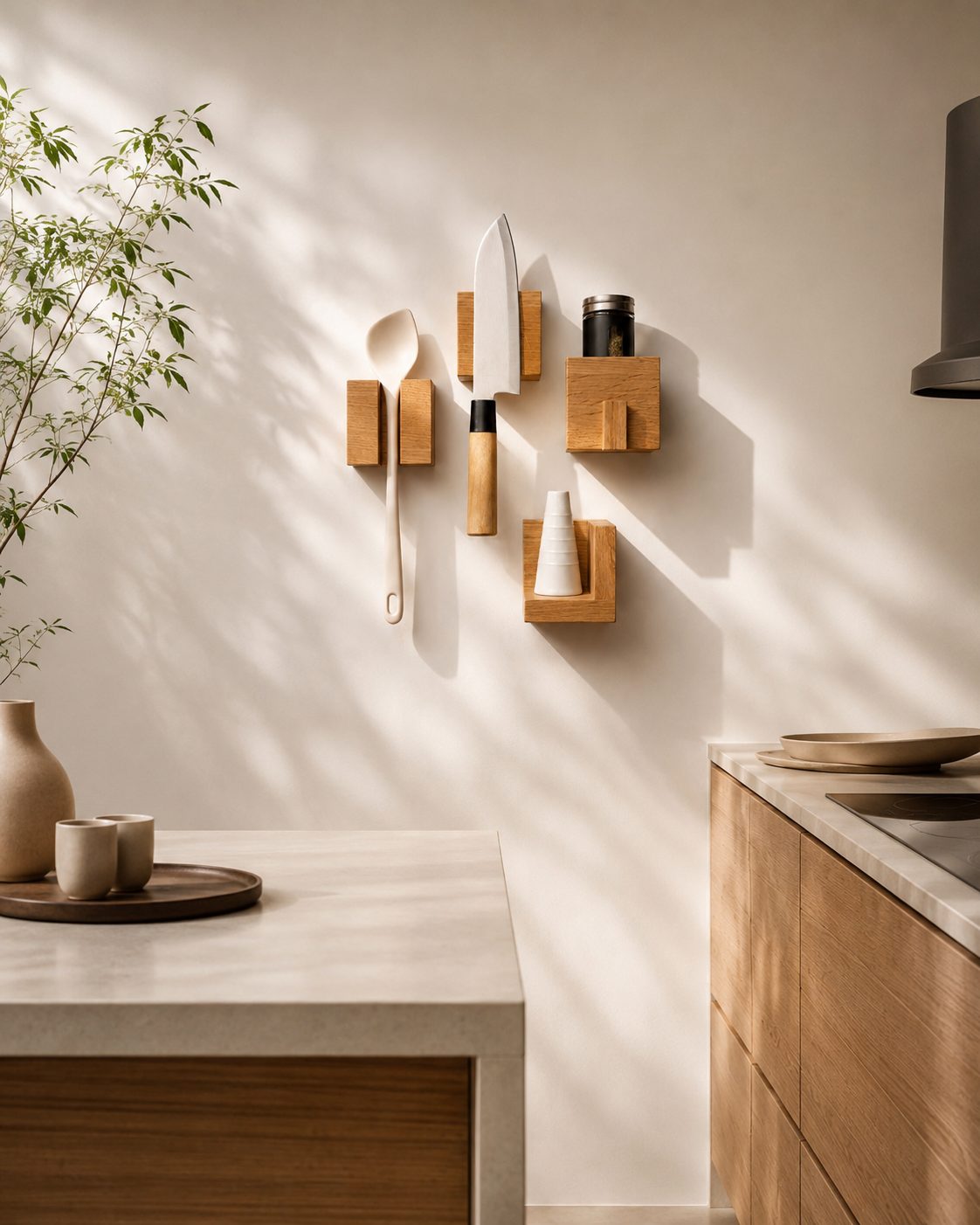
A Japandi kitchen is not a finished image. It is an ongoing relationship with material and ritual. Oak deepens in color, ceramics gather small imperfections, linen softens. The room matures with daily use, and the storage that lives within it should mature too.
Avoid filling the wall all at once. Add one element. Live with it for a few weeks. Notice what feels missing, then add the next piece. This slower approach is the antidote to the quick visual upgrades that often look composed in a single photograph but feel impersonal in real life.
The result is a kitchen that is unmistakably yours: organized without being clinical, minimal without being cold, and built to last for many years of cooking.
06
Featured OAKA kitchen system
The OAKA Pixel Series 01 is designed specifically for kitchens that want to combine clarity and warmth. Each piece is handmade in Dresden from solid oak, finished with natural oil, and sized to a shared 8 cm grid so that any combination remains visually coherent.
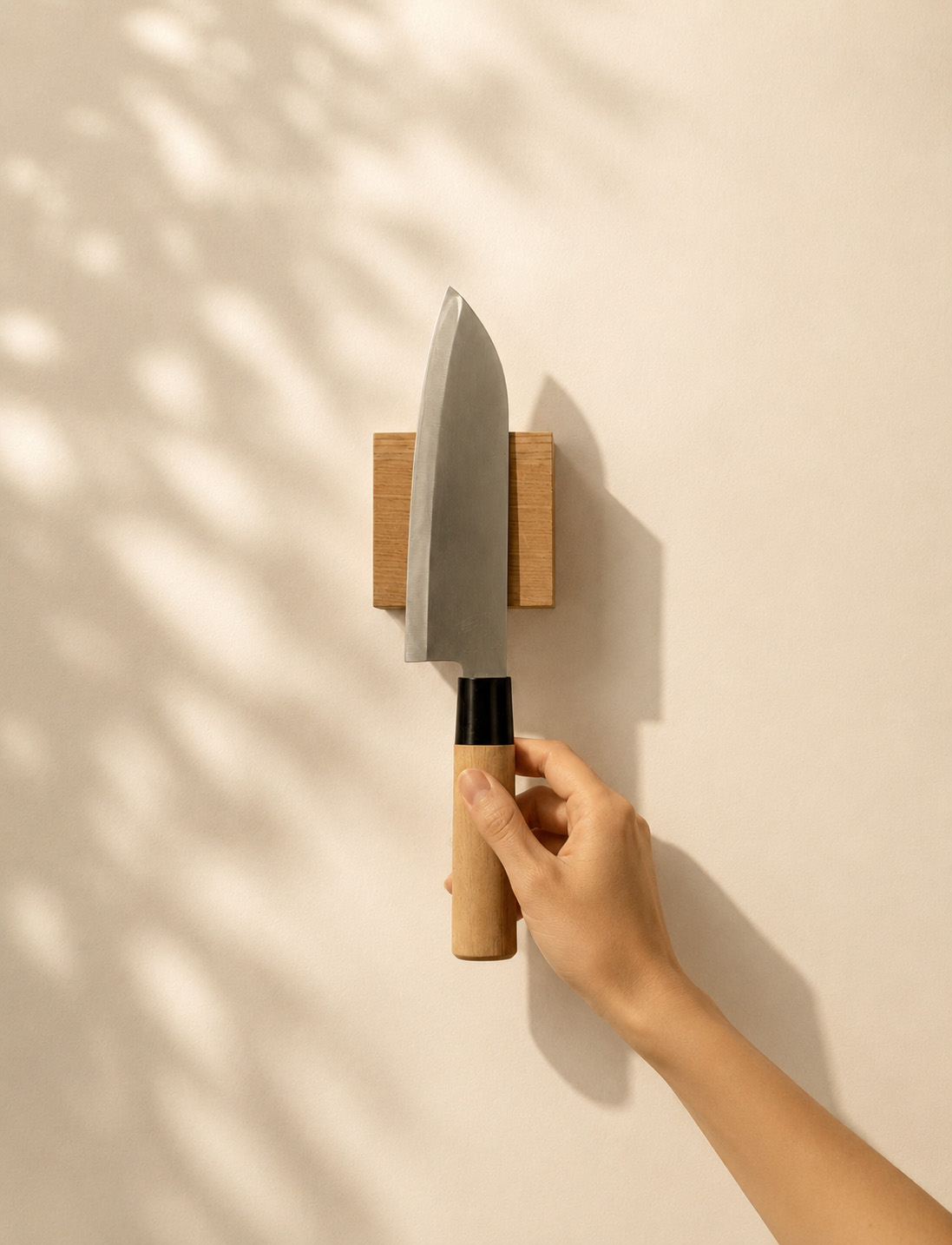
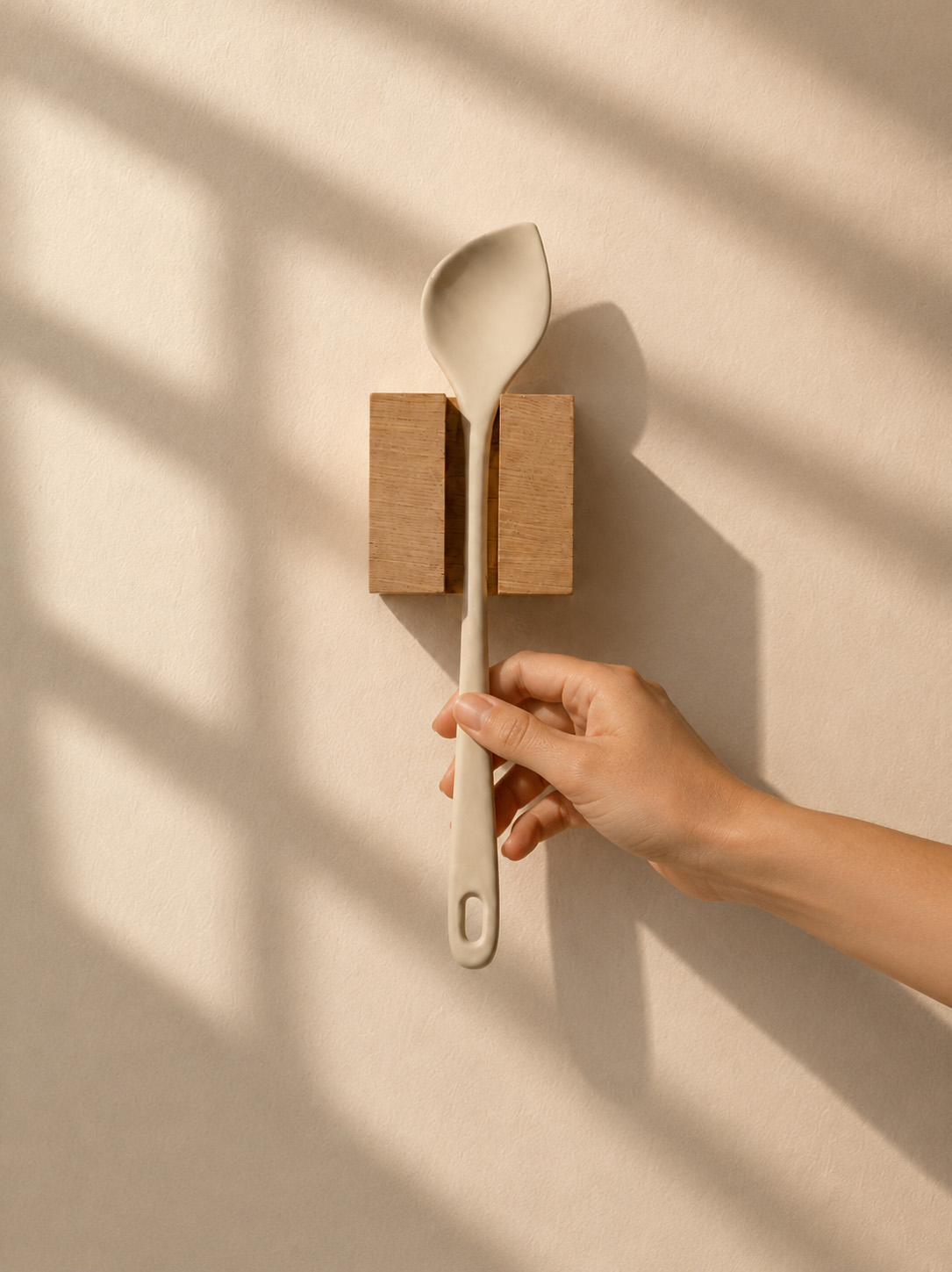
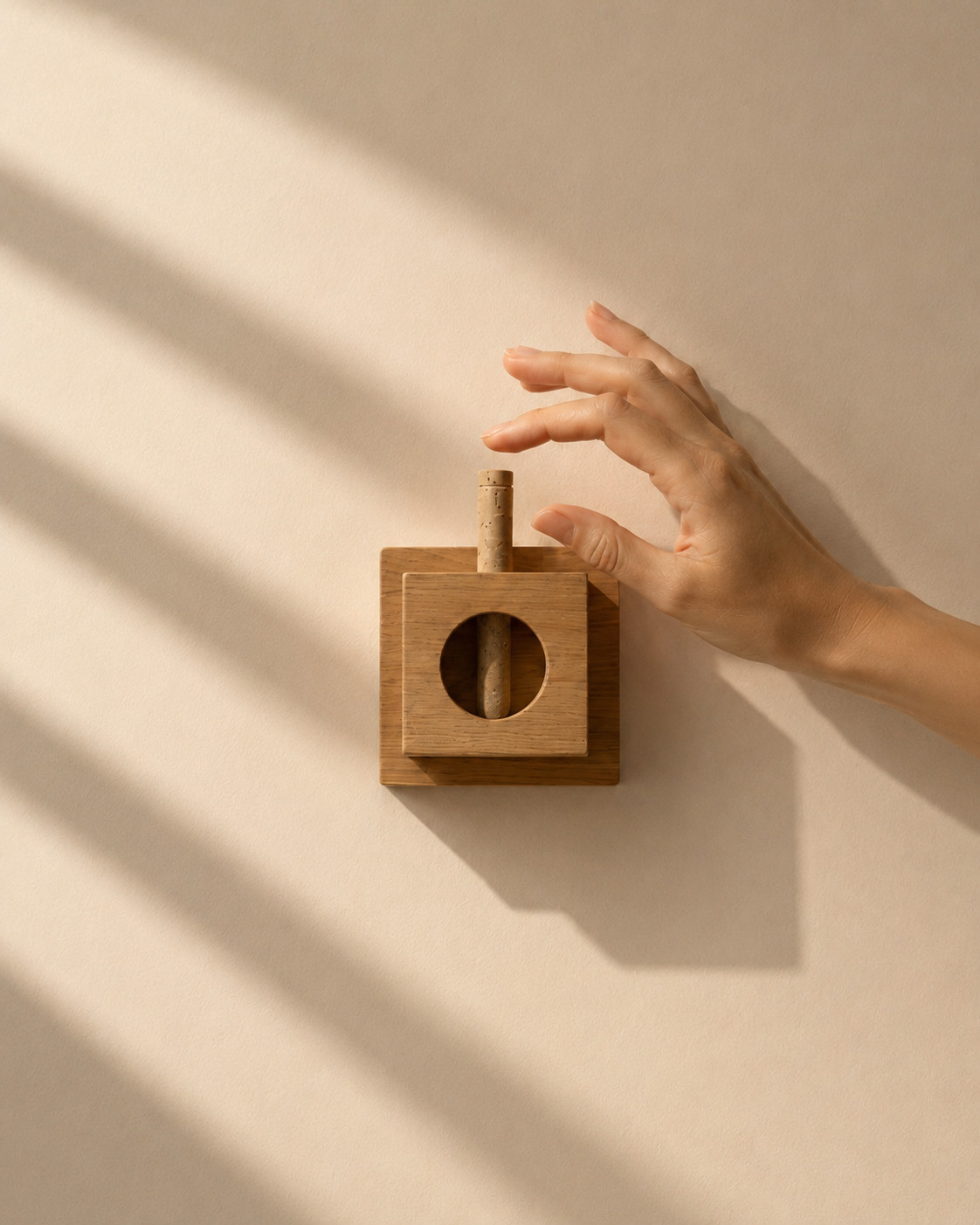
Begin with the Pixel Knife 01 to bring a chef knife out of the drawer and onto the wall. Pair it with the Pixel Utensil 01 for daily tools and the Pixel Spice 01 for the spices used most often. Together they form a complete, modular wall system that is small enough to start with and open enough to grow.
Objects in this space
The OAKA objects used here.
Pixel Knife 01
Minimalist magnetic oak knife holder. Brings a single chef knife onto the wall with clarity.
Pixel Utensil 01
Modular oak utensil holder for everyday kitchen tools, kept visible and within reach.
Pixel Spice 01
Sculptural oak spice holder for refined, low-clutter kitchen storage.
Explore
Explore More Spaces.
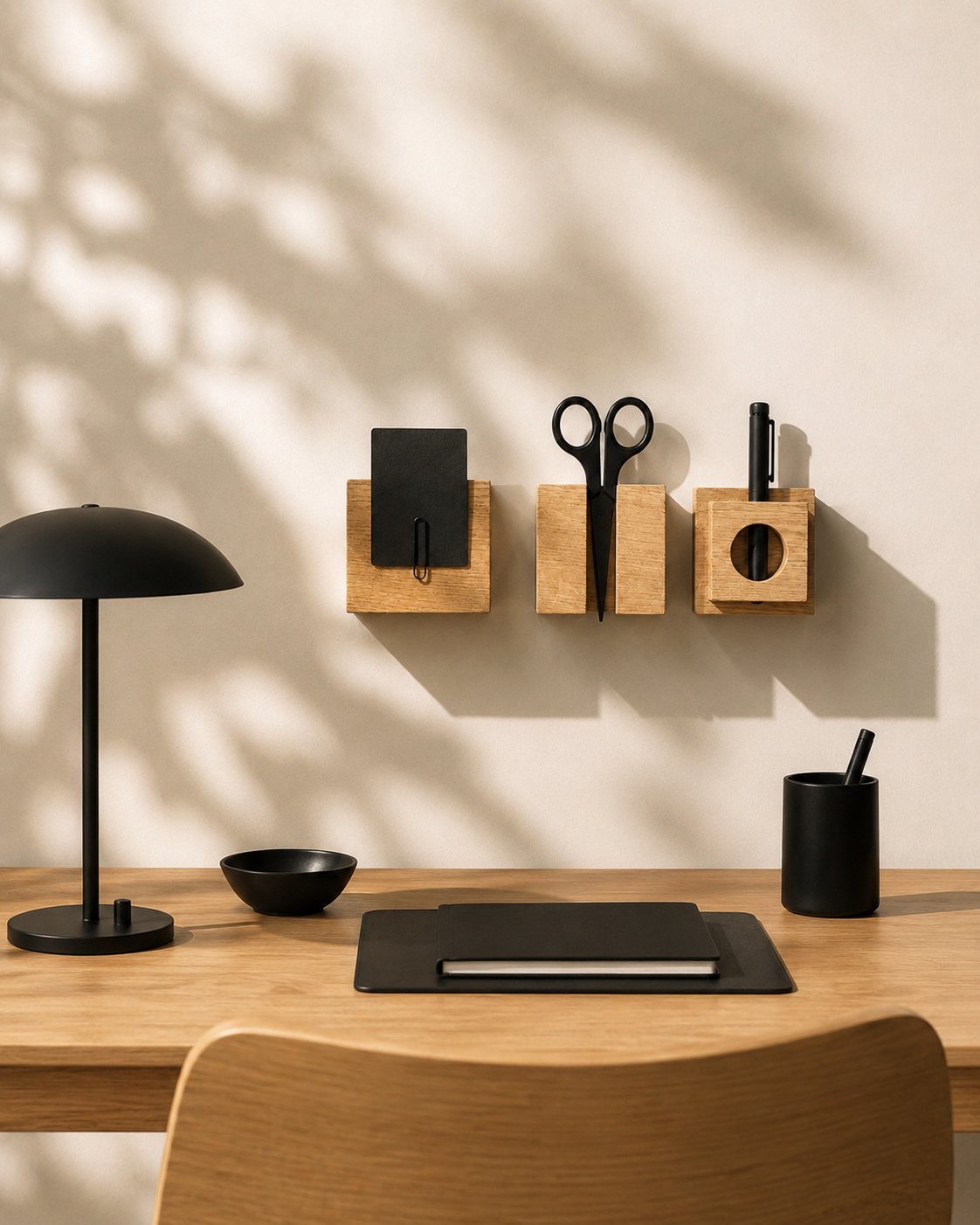
Workspace
Workspace
Workspace organization ideas and minimal desk setup inspiration for creative home offices and calm, focused work.
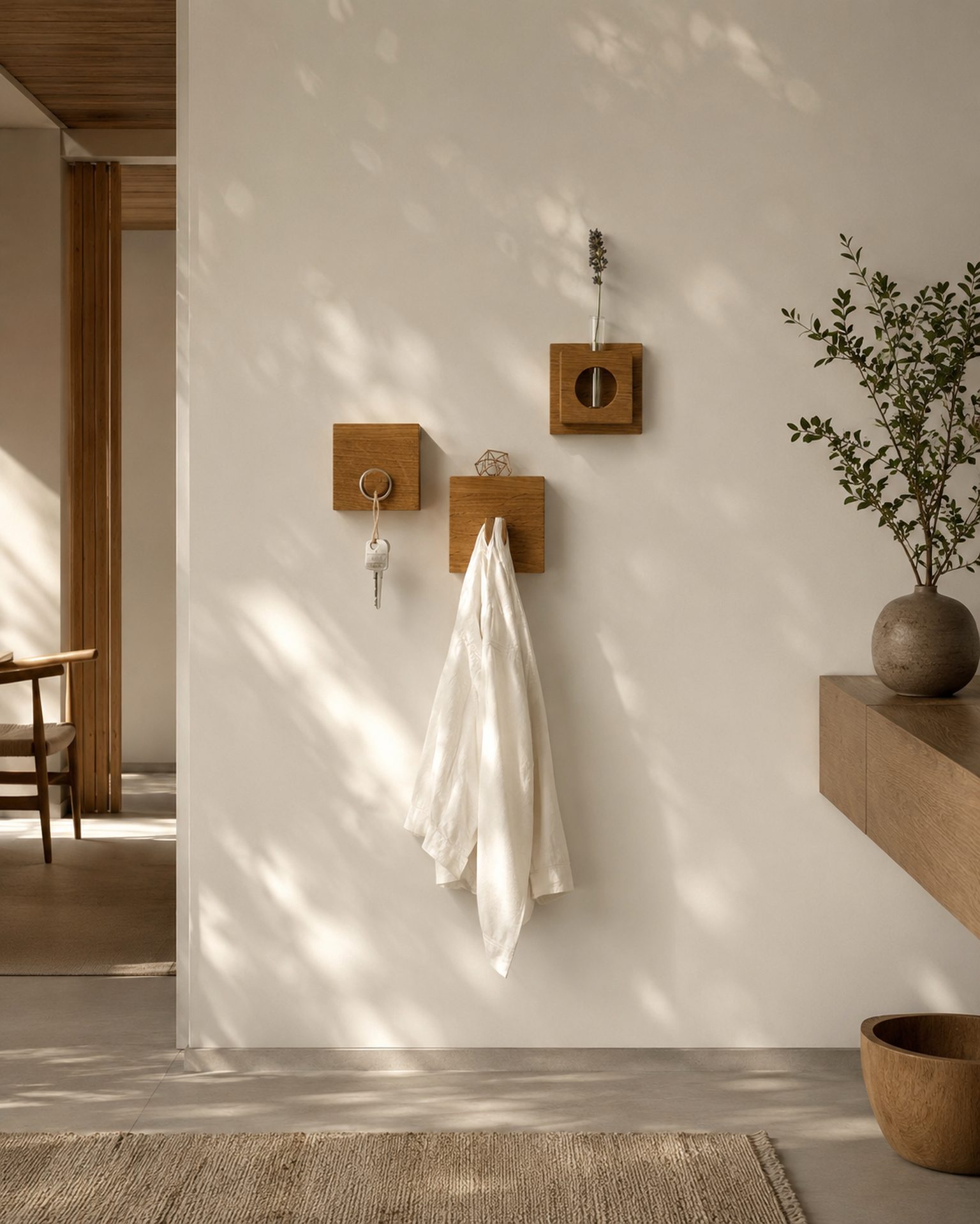
Entryway
Japandi Entryway
Japandi entryway ideas with modular oak wall storage for calm, organized arrivals.
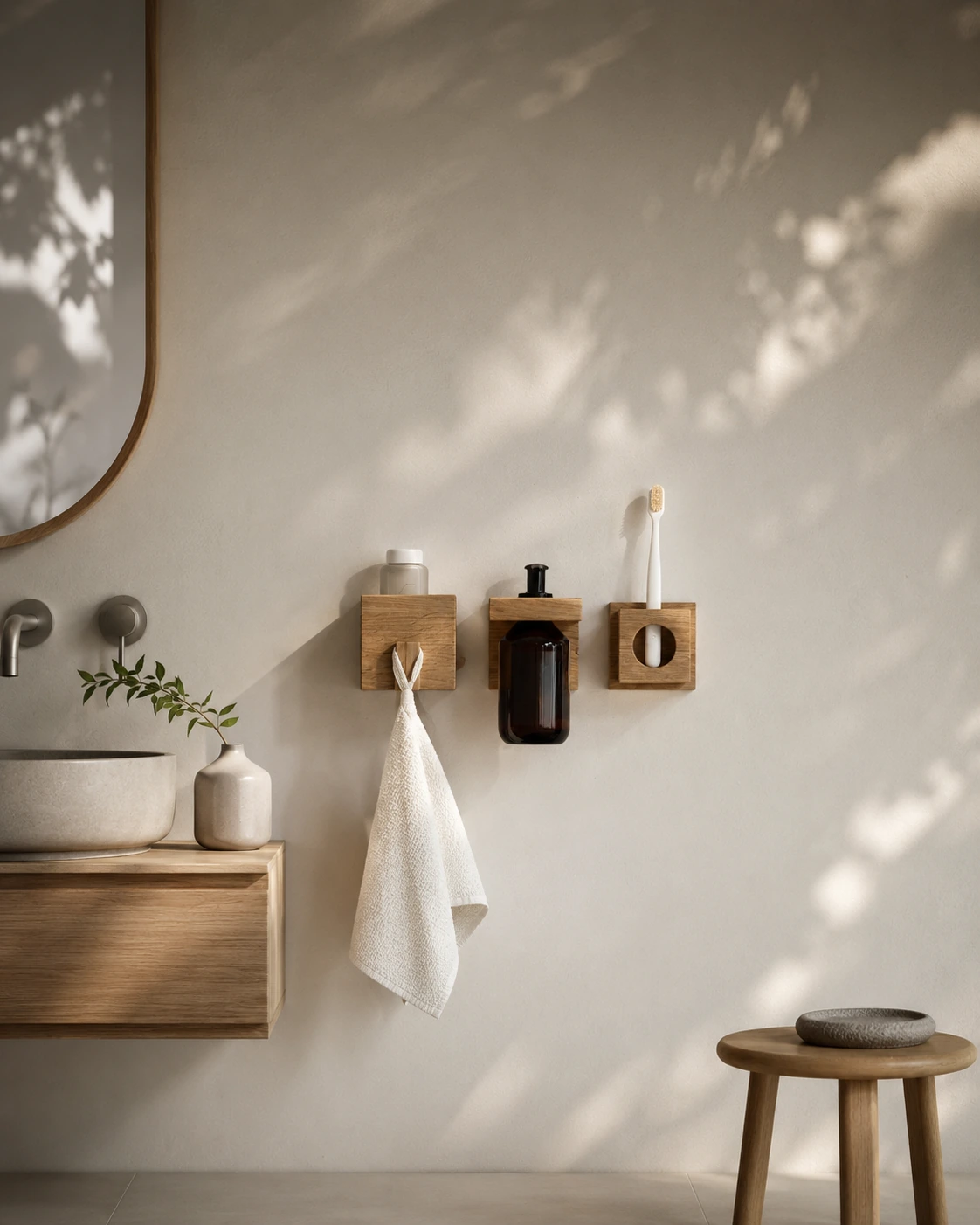
Bathroom
Japandi Bathroom
Japandi bathroom ideas with modular oak wall storage and bathroom organization for calm, minimalist bathrooms.